Oxfordshire Pension Fund’s Mark Smith on arm’s length independence, training pension committees, and why he can’t wait for the independent...

Interview

|
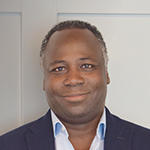
Ola Abdul |
In this exclusive Q&A, Fundment founder and CEO Ola Abdul explains why custom indexing, direct ownership and real-time execution are transforming the LGPS operating model, and why the future of pooling will be won by those who rebuild their investment architecture from the ground up
Ola Abdul (OA): “Fundment is essentially an investment operating engine that can help LGPS pools bridge the gap between their pension obligations and the investment products they can actually buy today. Rather than relying only on pooled funds, we enable direct ownership of the underlying securities through custom indexing.
“That means pools can design exposures that reflect their specific objectives, constraints and fiduciary responsibilities. And it’s flexible.
“It can sit alongside existing fund allocations or replace them where greater transparency, control or cost efficiency is needed. So, for the LGPS, it’s about making implementation faster, more precise and much more aligned with what the scheme is trying to achieve.”
OA: “The challenges we hear most often are transparency, responsiveness and cost. Traditional pooled structures make it hard to see what you own in real time, hard to adjust exposures quickly, and they introduce layers that add cost.
“What Fundment does is remove that fund layer and allow direct ownership at security level. So pools can apply mandate‑specific rules, exclusions, ESG criteria or income tilts instantly, and everything executes and records in real time.
“That gives a level of transparency and implementation precision that pooled funds just can’t offer. And it’s materially cheaper, especially when you get into more specialist exposures.”
OA: “We’re not an adviser. The pools and their advisers set the strategy. Our role is to provide the technology and operating infrastructure that lets them implement that strategy accurately and at speed.
“If needed, we can act as a sub‑investment manager, but the core idea is that we give advisers and pools the tools to design, test and execute decisions directly.
“By bringing portfolios, execution and governance‑ready data into one operating layer, we help pools act more like strategic investment partners rather than just reporting vehicles, while keeping full control and oversight of implementation.”
OA: “Custom indexing is powerful because it gives pools real‑time access to security‑level data across thousands of companies. Once you have that, you can start shaping the portfolio around whatever the challenge is, whether that’s income, risk, ESG criteria, sector exposure, UK tilts, anything that’s specific to the mandate.
“If income is the priority, you tilt the index towards income. If the challenge is risk, you adjust the exposures accordingly. And because everything is built at security level, you can see exactly what the portfolio will look like before you implement it.
“You can compare it against any mutual fund or benchmark, and if the custom index delivers the better outcome, you can execute immediately.
“So it’s about transparency and precision as much as customisation. And it offers the ability to implement decisions in real time, which is exactly what LGPS pools have been asking for.”
OA: “What Fundment really does is give pools the technology to understand their investments at a much deeper level.
“They can analyse their current exposures, run comparisons, model alternatives and see the impact of different decisions instantly. That’s what shifts them from being mainly reporting vehicles to being genuine strategic partners.
“We’re not the adviser; that’s their role. But we give them the operating layer that lets them design and test ideas, and then implement them with full transparency and a complete audit trail.
“It means they can have much more informed conversations with their stakeholders, because they’re working off real‑time, security‑level data rather than aggregated fund‑level information.
“So the technology elevates their role. It gives them the tools to drive better investment outcomes, not just report on them.”
OA: “We don’t get involved in how individual funds are run. That’s managed by their own teams. But what we can do is bring the performance and underlying data from those funds into the platform and then compare that against any custom indexing strategy that’s been built.
“The custom index is its own strategy, and once it’s constructed, you can measure it directly against an existing mutual fund or pooled product. You can look at exposures, costs, risk, income characteristics, all at security level.
So, while we’re not comparing funds to each other, we are giving pools and advisers a way to benchmark what they currently hold against what’s possible with direct ownership. It’s about giving them a clearer, more transparent basis for decision making.”
OA: “Collective divestment decisions really sit with the advisers and local authorities. They’re the ones who understand the policy, member requirements and the governance framework. What we do is provide the technology to take whatever instruction is given and implement it cleanly and in real time.
“Divestment can happen for lots of reasons: income needs to be returned to members, or a particular exposure no longer fits the parameters it was designed for.
“Whatever the reason, once the advisers make that call, we can execute it immediately, with every trade captured in a single audit trail. It’s the same principle as investing, but direct ownership and real‑time execution make the whole process faster and easier to govern.”
OA: “In many ways, yes. When you move to custom indexing and direct ownership, you naturally bring more of the decision‑making back in‑house. If you award a mandate to a traditional investment manager through a pooled fund, you’ve effectively outsourced that responsibility.
“With direct ownership, the pool retains that responsibility, which is actually what the regulations expect. But you can do it in a way that’s efficient and scalable.
“You’re no longer operating inside a fund structure where you have limited control. You’re operating inside your own architecture, with full transparency and the ability to shape exposures directly. So yes, it does support a shift toward more in‑house implementation, but in a way that’s operationally robust and governance‑ready.”
OA: “I think Fit for the Future is fundamentally an architectural question. Scale and cost are important, but they’re symptoms, not the core issue. The real challenge is that pension requirements sit on one side and the investment products available today sit on the other. And they’re not well connected.
“What we need is an investment engine that’s designed around the pension system itself. That’s where technology and direct implementation come in.
“If you build the right architecture – I mean one operating layer, real‑time execution, security‑level data – then scale and cost naturally improve. But the starting point has to be the architecture, not the symptoms.”
OA: “Once you move into custom indexing and direct ownership, the cost profile changes immediately. You’re no longer paying for multiple layers of pooled fund infrastructure, and that creates significant savings, especially for specialist exposures.
“On top of that, the reporting becomes much clearer. Because everything is built at security level, you can see the holdings, the exposures, the execution costs, all of it, in real time. And because it’s all generated from a single operating layer, CTI reporting, TCFD disclosures, attribution, valuations… they all draw from the same underlying data.
“For value for money, that’s a much stronger position. You can show exactly what you own, what it costs, and how decisions translate into the underlying assets.”
OA: “Yes, absolutely. You can tilt towards the UK very easily. You can tilt towards UK income, UK sectors, or any fiduciary requirement that can be expressed at security level. That’s one of the strengths of custom indexing.
“Local exposure is possible too, but it depends on how that exposure is defined. If a particular region is strongly linked to a specific sector, then tilting to that sector is straightforward.
“If it’s about individual companies tied to a region, that’s also possible as long as the universe is clear. So the short answer is yes but the specifics matter, and that’s where the data and the modelling come in.”
OA: “I think the biggest impact will come from bringing modern investment technology into a part of the market that hasn’t really had access to it. There’s a gap today between what pension schemes need and what the investment structures can deliver. Fundment sits right in that gap.
“We understand both sides: the pension requirements and the investment mechanics. And we’ve built an operating engine that connects them.
“Over time, that means better transparency, better implementation, lower cost and a much stronger alignment between the pension promise and the investment reality. That’s where we think we can move the market forward.”
|
|
|