
Interview
“I like to build things”: Chris Rule’s LGPS story
Interviewee:

|
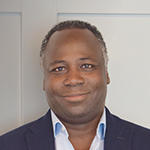
Chris Rule |
As LGPS reforms accelerate, LPPI’s chief executive Chris Rule outlines the importance of collaboration, clarity and adaptability
For an industry built on stability, there has been an awful lot of reform in the LGPS over the past decade – whether that be the birth of pooling or the changing role pools have in the post-Fit for the Future world.
And, while the names of the funds and organisations have stayed the same over the past 10 years or so, the role that they play has changed and is changing radically.
This may be anathema to some, but for Chris Rule – chief executive of LPPI – it’s almost the perfect environment to be in.
“I like to build things,” he explained. “I’m not very good at turning the handle of a machine someone else has already built.
“Most of my roles have involved change of some description, evolving an investment process or building a business. And so, even though I’ve stayed with the same employer for a good number of years each time, my roles tend to change quite rapidly in that period.”
It is an instinct he learnt early on in his career and has been key to driving LPPI through what has been one of the most complex periods in the pool’s short history.
Before the LGPS
While he has built a long and storied career in the investment world, it was never the plan from the very outset – deciding to study geography and geology at the University of Manchester because it was “something I was interested in, rather than particularly vocational”.
But – after being left a £1,000 inheritance by a relative – he thought he’d invest it. “And that’s probably where I first started taking more of an interest in financial markets.”
Driven by his newfound interest in the financial markets, as well as his long-standing interest in statistics and analytics, he ended up writing letters to try to get an internship.
And, after going for a long summer holiday travelling, Chris ended up being offered a role at a small asset manager to do risk management.
He added: “That’s where I ended up, it wasn’t really a long, thought-out plan. I was thinking about what I was interested in, sending letters, and opportunities come along, and that’s how I started.
“I came in at the ground level, very much in an analytical role working on the risk team, but the business was attached to a brokerage business, and part of their operating model was to seed new asset managers.
“We did everything on a segregated account basis, rather than investing in funds, which meant we had full transparency. And so the risk function was responsible for building tools to understand the risks and assist in the asset allocation between those managers.
“That’s how I cut my teeth, as it were, in the job, and then moved into various investment management roles after that.”
There were several learnings he took from this work, the first being that managing risk is the first part of managing investments. The second was how he liaised with clients on their portfolios – asking questions about their overall objectives, the risks they already have in their portfolio, and how a portfolio can be constructed to achieve their objectives.
Joining the sector
As when he first entered the investments world, his shift into the LGPS wasn’t planned. Explaining how he ended up taking on the role as LPFA’s chief investment officer, he said: “It was an opportunity that arose.
“A headhunter phoned me up and said ‘are you interested in the job’, and it wasn’t something I’d actively pursued.” This led him to research not just the role but the sector itself – and it was during this time that he discovered something unique to the LGPS.
He explained: “[In the LGPS] you have a stable and growing asset base, you’re not out marketing the whole time, having to sell. It’s stable, permanent capital, and that lends itself very well to being one of the few areas where you have a genuine long term investment horizon.
“As an investor, one of the most frustrating things I had in my previous roles was, in theory, we had institutional capital with long-term horizons, but they’re still worried about the monthly fact sheet every time. You’re still on the road every three months meeting clients and being challenged for why you’ve had a down month or quarter.
“And so whilst there is, in theory, a long-term investment horizon, it wasn’t really. Whereas the LGPS really does have a long-term horizon, and that’s because it’s an asset and liability problem rather than just an asset problem.
“So that was attractive and then, it’s a little bit clichéd, but it’s a much more meaningful purpose – focusing on investment returns for the benefit of members and employers.”
Chris also felt it was a sector ready for change. He said: “When I joined it was kind of the preamble; there had been lots of talk around active versus passive management and the government wanting to see costs coming down.
“No conclusions had been drawn at that point, but it was clearly an area that hadn’t changed much in the recent past. Therefore it felt like it was somewhere where I could not only apply my investment skillset but I could influence change as well.”
The pooling era
July 8, 2015, and all the pomp and ceremony of Budget Day. It was the Conservatives’ first since winning a surprise overall majority at that year’s general election.
After 60 minutes of the customary political grandstanding and enjoyment in the glow of a post-election victory budget, a tranche of documents laying out in fine detail the government’s plans for its, in hindsight ill-fated and finite, time in office was published.
And, hidden among the 123-page document was a small, one paragraph announcement. It read: “The government will work with Local Government Pension Scheme administering authorities to ensure that they pool investments to significantly reduce costs, while maintaining overall investment performance.”
Now it may be easy to say that this was the catalyst for collaboration and change in the LGPS, but in truth – as was pointed out by Chris – it had been on the cards some time before such an announcement was made at government level.
Indeed what would become LPPI – formed by a “coalition of the willing” – came months before the then chancellor George Osborne stood up and talked about pooling.
In fact, conversations around the formation of what would eventually become the LPPI pool began even before Chris joined LPFA. And while there hadn’t been any concrete decisions on how this would look in practice, the idea that the fund would like to work collectively and in partnership with others, had already been decided.
Chris added: “We were probably having, at one point, a dozen or so different conversations, and the ones that ended up coming to fruition were the conversation with Lancashire on forming LPP and LPPI, and the conversation with Greater Manchester to form GLIL.”
As for how Chris ended up assuming the role of co-CIO and managing director at LPPI, it was all about generating greater scale.
He explained: “We didn’t want to merge the funds and therefore we created an entity to do that, an in-house manager, which was what LPPI was when it was set up. And so, I was the CIO of LPFA, and I was TUPEd into LPPI.
“There was no one left in the LPFA investment team because we lifted and shifted the team across, and something similar was done at Lancashire, and we formed this new business which was owned by the pension funds and was serving those pension funds in a collective manner.”
The corporate structure set up at the outset saw the creation of LPP as the parent company, which housed its operational activities – such as HR, finance and pension administration – with LPPI formed to operate its investment functions as part of a regulated structure for the organisation.
Chris was the managing director of this subsidiary, as well as assuming the role of co-CIO – alongside Lancashire CIO Mike Jensen, becoming the pool’s sole CIO when Jensen left the business in 2017.
This remained the case until 2019 when the then chief executive of LPPI’s parent company LPP Susan Martin decided she wanted to leave. “She was my boss”, Chris explained.
“So, the question was put to me when she was leaving ‘do I want a new boss, or do I want to be considered for the chief executive role of the group?’ And I put my hat in the ring to say yes, I would be interested in that.
“Initially I was the interim chief executive, and then we went through a process to decide that I would become the chief executive.”
This process gave Chris the chance to present his vision for what the company would be if he were to become its chief executive.
As part of this process, he put together a proposal to properly distinguish between the administration activities and the investment activities. He explained: “Up until that point all those operational functions were set up in the parent company.
“But in 2020 we separated those out, so we transferred all of that from the parent company either into LPPI or into LPPA – effectively activating the administration business, which had been dormant as a separate entity.
“We put a board in place for the administration entity. I sit on that board, but my role has always been substantially running the investment business, but I also have a group chief executive hat.
“When I did that, we changed my job title from managing director to chief executive, but I wasn’t really changing my job from an investment point of view. I was just taking on responsibility for the group as well, and that included oversight of what we’re doing in the administration business.”
Growing the pool
Six years, five pensions’ ministers, two governments and two elections’ into the post, and Chris has led the LPPI team through the latest radical shift in the pooling landscape – with the pool taking on six new funds, growing from three funds to nine.
This influx of new funds has given the pool an opportunity to gain a fresh perspective on things, allowing for a clearer connection between the actions it takes and the impact it has on the end fund, for members and employers.
Chris added: “I think inevitably the more exposure you have, the more informative that is. And so we’ve gone from having three conversations like that to having nine conversations like that.
“I think they also bring some experience in things like local investment.
“We’ve always done local investment portfolios for our partner funds, we run them for each partner fund, but so have some of the incoming partner funds and they’ve done things in slightly different and complementary ways to us, so we’ve learnt from them from that point of view.”
Another positive from these conversations from Chris’s point of view is how open and collaborative each of the funds have been, sharing their experience and knowledge.
He added: “We’ve had the benefit of working in a relatively small group, and so we can be, candidly, a little bit informal – if I need to speak to our partner funds, I can send an email and say ‘are you around tomorrow morning at 9am and we can jump on a call’.
“When you’re trying to coordinate a larger cohort of stakeholders, you need to be a bit more formal, a bit more structured about that, and they bring that experience of working in that bigger group to bear there, and that’s been really valuable as we try to navigate that.”
As for how it was managing the transition, Chris was very clear that getting the governance side right was top of the list of priorities.
He explained: “One of the first things that we wanted to be clear on is that this is a long-term benefit, and we need to manage it in that way, and therefore we don’t want to unnecessarily rush things like asset transitions.
“What is necessary to move quickly on, though, is to get the right governance position and get the strategic structure in place. So there’s multiple phases to the joining of new partner funds.
“The one that we focused on over the last several months is that straightforward onboarding process. That’s adjusting the shareholding so that all nine will be shareholders of our business from the beginning of April, but also putting in place asset management or investment management agreements that are necessary between LPPI as the manager and the partner fund as the client.
“So, the legal work around doing that and rebalancing the shareholding has been a big priority but also making sure we’ve got familiarity with the investment portfolios that we’re going to be taking responsibility for.”
All in all, this process was designed to ensure it was in a position – from the beginning of April – to act as a fiduciary manager on their behalf.
He added: “What we’re not doing is massive transition of actual assets. So, to a large extent, the investments that each partner fund owns at the end of March will be the same investments they have at the beginning of April.”
Post-March, the pool has now entered stage two of the process, working with the funds towards the final regulations and guidance around Fit for the Future. He explained: “It’s likely that everyone’s going to need to revise their investment strategy statement to match the government’s new nine asset buckets.
“It’s necessary for them to articulate more detail around what their objectives are around local investment, and we want to understand better what their preferences and priorities are.”
Like almost all of the pools post-Fit for the Future and the subsequent consolidation process, LPPI has gone through a big recruitment drive to ensure it got the scale internally to manage the growth in assets under management.
Added to the fact that all of the pool’s new additions are based in the south-west of England, it makes sense for LPPI to have a presence in the region. And that’s exactly what it is doing with the opening of an office in Bristol.
As part of this process, the pool is bringing on board a dozen or so colleagues from Brunel – the pool which all six of the new funds are joining from – to draw on their knowledge and experience of local investment, as well as their pre-existing relationships with the funds.
The local question
One of the standout aspects of the new requirements for the LGPS and one that has been the subject of much debate in terms of how it can be implemented is on local investment.
Under Fit for the Future, the pension fund committees are required to set out a strategy for their local investment approach. This must include a target for allocation with regard to local growth plans and priorities, with these plans having to be finalised by September this year.
Chris explained: “Government requires funds to set a target for local and define what they mean by that, but they haven’t said the target has to be above zero. So it’s still possible for a fund to set a zero local target if that’s what they believe is the right thing.
“It’s safe to say that’s not what the government hopes they do, but they can do that. But what they should be really clear about is what types of objectives they have for their local investment portfolio.”
This gives pools like LPPI a clear investment mandate in terms how much capital they’ve got to deploy and where – it is then their responsibility to find opportunities in those spaces.
Chris added: “So for us, I think that’s probably a small evolution from what we’ve done in the past – we’re used to doing this, particularly in areas like real estate. The question will be: do they want to move out of real estate and do it in other areas?
“I think probably the consideration with, let’s say infrastructure, we do infrastructure in a very extensive way – GLIL is our principal route for doing that in the UK – but it’s often hard to define the geography of an infrastructure asset.
“We own, for example, mobile phone towers – but they’re dotted all over the country. So from that point of view, local equals UK and I think that’s fine, and in our response [to Fit for the Future] we encouraged government to think about the UK as a reasonable definition of local.
“That’s not quite where the legislation looks like it will land, but we do need to have clarity from our partner funds on what the mandate is that they want us to implement, and it’s our job to work with them to help them to build that.”
And to ensure the pool is aligned with its funds on this, it’s having conversations with each pool about what its definition of local actually is – whether it’s their administering authority area, them and their neighbours, the pool area or some other definition of what local means.
Chris added: “I suspect for most funds, their first priority around local will be their administering authority area – that’s what’s most likely to resonate with their members.
“But I think they’ll be pragmatic enough to say ‘we understand our members and communities cross borders, and therefore a slightly broader definition will be acceptable as well’ – it’s a question of priorities.”
Working together
If LPPI is a symbol of one thing above all others, it is the benefit of cross-pool collaboration – whether that’s its work with Northern LGPS through GLIL, or its work alongside London CIV through The London Fund. And Chris hopes this sort of thing continues into the future.
He explained: “It goes back to our origins. We very much believe in that, by working collectively, and by bringing in that expertise and scale from others, then we can achieve more than if we try to do that in isolation.
“One of the outcomes, I hope, that comes out of the policy reform we’re going through is that, once the dust settles, it will be easier for people to come together and work on those opportunities.”
He added: “We shouldn’t be territorial about good ideas. We should share those good ideas and try and make sure that everyone benefits from them.
“And I do sense from my peers in the sector that there is an appetite to do that.”
Chris Rule’s journey reflects both the accidental nature of careers and the deliberate pursuit of change, with his instinct for evolution aligning neatly with a transforming LGPS landscape.
From early lessons in risk and client outcomes to leading LPPI through pooling, expansion and governance reform, his focus has remained on building structures that support long-term, purposeful investment.
As the LGPS enters its next phase under Fit for the Future, Chris’s emphasis on collaboration, clarity of mandate and pragmatic local investment highlights a model built not just for scale, but also for adaptability.
In a system often defined by stability, his approach suggests that embracing change – rather than resisting it – may be the key to delivering better outcomes for members and communities alike.
More Related Content...



|
|
|