Oxfordshire Pension Fund’s Mark Smith on arm’s length independence, training pension committees, and why he can’t wait for the independent...

Interview

|
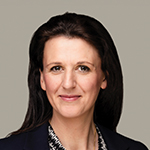
Louise Jack |
Three funds became nine, assets doubled, and headcount rose less than 15%. Always a Pensions Angle caught up with Louise Jack to hear how LPPI prepared – and what global peers taught her
When Fit for the Future landed, LPPI responded at pace: three partner funds became nine, assets under management doubled, and around fifteen former Brunel colleagues joined the team – all inside a year, and with headcount up by less than 15%.
Always a Pensions Angle (AAPA) caught up with Louise Jack (LJ), LPPI’s chief operating and finance officer, to hear how the pool prepared for that step-change, what it’s learned from global peers on technology and governance, and how she thinks about cyber risk and operational resilience as custodian of a growing share of LGPS assets.
This is just a snapshot of everything that was discussed, listen to the full interview here.
LJ: “You’re right to say the pool has grown. So overnight from the 31st March to 1st April, we tripled our client base from three to nine, we doubled our AUM, and we have been increasing our number employees.
“We’ve actually only increased on our employees by less than 15%, so that’s delivering the benefits of pooling we would like to think. Our mature platform has enabled us to deliver operational gearing, so we haven’t needed to increase people in line with the increase in assets and clients.
“What’s important to us when we’re bringing someone to the team? It’s probably 50/50, between the competences that they bring and the motivation for working with us. That competence, as you’d imagine, is a mixture of their experience, whether they have a collaborative mindset, and if they’ve got a track record in delivering.
“But more importantly, it’s that motivational piece. Here we look at our employee value proposition, and that is part of our interview process to ensure, if they haven’t worked in the LGPS before, they understand what’s important to us; about the purpose, why we’re all working there. Do they see the link to the end members the employees and the contributions?
“That’s something that is clearly asked in all our interviews, and we gauge whether or not somebody understands our mission and purpose because that’s very important about working within the team, and it’s something that drives certainly all the senior leadership at LPPI.”
LJ: “I joined about three years ago, and definitely part of what attracted me to the role – other than the purpose – is the ambition that LPPI had to grow. So, when I understood and saw the Fit for the Future consultation, my eyes were gleaming as it was a real opportunity to invest in the platform – to make sure we’ve got the systems ready so we can be ready to receive any incoming clients and partner funds.
“I suppose the moment of dawning was when it was crystallising last September when we signed the memorandum of understanding with the new and existing partner funds.”
LJ: “First of all, we looked at what was required under Fit for the Future, which has, on paper, a structural element. You’ve got the operating model requirements, which – by and large – we met or were in the process of being able to meet.
“Then it became a matter of looking at what’s important when bringing in the new partner funds. A big part of that involves creating trust –not only with the incoming partner fund themselves, but also between them and our existing clients. Suddenly, they all had to get to know a whole new group of people, not only from the pool side, but also their fellow partner funds, to trust in their fellow shareholders.
“They also need to trust in us as a pool, because they’re going to be allowing us to manage their investments from the 1st April, which is what we’re now doing.
There was very much a focus on, how do we build that relationship? How do we explain our ways of working? How do we evolve our ways of working with the larger client base, so that they can be comfortable and trusting in us in a relatively quick period of time?
“If you look at other big changes in managers, it can take anywhere between a year and three years for those decisions to be made, so it was a very compressed timeline to build that trust and rapport so that there was comfort in us managing the investments.”
LJ: “When we looked at how many more people we would need to support the enlarged pool, there was between 15 and 20 people that we needed, and we very consciously advertised those roles first to the Brunel staff.
“We’ve got about 15 Brunel employees that have either joined us now or in the process of joining us. Most of our growth is in the client facing roles, and so the Brunel staff has brought great experience around that, and – importantly – that historical corporate knowledge.
“They’ve been through the last 5-10 years with the Brunel clients, they understand the journey they’ve already been on, and can bring those learnings and understanding with them.”
LJ: “What we’re looking at from a pool perspective is for better outcomes for members and employers.
“As part of that, and with more scale, you do have more responsibility. On the investment side, you’d automatically look to the stewardship element of that – how can we be using our voice more effectively?
“We have internal processes around that, and we listen to the partner funds in terms of their preferences for that, so we would look to continue to leverage that from a stewardship perspective around the assets.
“More broadly, it gives us – as an LGPS – the opportunity to be looking to our global peers on how to learn. With my chief operating and finance hat on, I look to those global peers to say, how do they structure their teams?
“They’ve been through the journey, what we’re doing isn’t new, there are other large asset managers out there. So how have they effectively automated? How are people using AI?
“How can you use that scale more effectively? Is that through more effective outsourcing or insourcing? Is it through stronger management of your vendors – because as you become larger in scale, you become a more important client of those third parties – so how can you use that effectively in the oversight that we have of others?
“So, there’s internal lens and an external lens to having more scale and influence.”
LJ: “It’s ongoing and you can take lessons learned and things not to repeat as well from different discussions.
“Something that I relished when I came to LPPI was the fact that it is a relatively young organisation, which means you don’t have that much legacy – so when I was looking at how to set up our operating model, I had a relatively blank sheet of paper – there weren’t big legacy systems that I needed to overhaul.
“A key learning I had from speaking to some of the Canadian pension funds, who have been around much longer, is that they’d invested a lot in internal resources to build technology internally, and that creates a high ongoing burden for that technology debt. That’s because once you create something in-house, you need to continually invest in it, and you only have people within an organisation that know about that technology.
“So it’s a very intentional decision that we have a ‘buy over build’ for technology, and whenever we have a need for automation or technology, we’ll look externally as a default first before building internally, and that’s a much more resilient and cost-effective approach.
“Another example would be around governance. So, as we’ve been evolving our governance model over the years, we’ve looked to the Australian super funds and other European asset managers to see what works effectively when you’ve got a regulated entity, but you also want to ensure that your shareholders have the right level of influence and decision-making, without that needing to cut across your regulatory obligations.
“And that’s led us to have a regulated entity, LPPI, but also a holding company which has our shareholder representation on it.”
LJ: “When I think about transparent governance, I think about it in three phases or pillars. The first one is: is everybody clear about the roles and responsibilities in that governance structure? Then: whose role is it to decide what the strategic asset allocation is? That’s the partner fund. Finally: whose role is it is to implement that? That’s us as the pool company.
“That may be a very obvious example, but you need to be setting up the expectations on the roles and responsibilities first and where decisions lie.
“That moves on to, when decisions are being made, is it clear and transparent that a decision has been made and that it’s communicated afterwards, with the rationale for why that decision is made.
“That could be happening within the partner fund, or that could be happening collaboratively with the pool, but is there transparency of when a decision is made, how it’s made and communicated afterwards?
“That follows on to reporting around that, which is typically after the after the event of a governance decision. So is that reporting helpful in terms of holding the pool to account? Is it regular, so that people get into a rhythm and they trust they’re going to get that information, they’re going to get that reporting.
“I think that helps in terms of the transparent governance that from a fund perspective, they’re expecting to receive regular quarterly reporting that they do receive that, and it’s predictable, and it’s showing backward looking what decisions have been made.
“But then also it’s looking forward to sign-post where decisions might be upcoming. And ultimately, you want that reporting to be decision useful, so that the funds have the right information to support them in the decisions they need to make as well.”
LJ: “As a FCA regulated firm, and also of a large number of assets, we take cyber and operational resiliency very seriously.
“From a cyber perspective, we have looked to what the market standard for accreditations we would need. We’re cyber essentials plus certified. We’re ISO 27001 certified, that’s what you would expect of a large, regulated asset owner.
“We hold those accreditations, we have for a number of years. That gives external assurance to others that we are monitoring these things, and these are accreditations that themselves evolve each year.
“Cyber is ever evolving. You always try to be two steps ahead, but you never can be because there’s always a smarter person, bad actor on the other side, so it’s important that that’s an annual accreditation because those standards – what is market norm – continuingly increase or change.
“On a broader operational resiliency, we can be preventative and preparatory around that. So, we do desktop exercises around that, such as scenario analysis where we look at a black swan event where multiple activities happen at once, and what would be the impact on our business.
“A scenario could be that one of our key systems goes down, that coincides with huge market volatility, and maybe that also coincides with key personnel being off. We mock up that desktop exercise to say, in that scenario, what’s the worst case that will be happening and how that impacts our clients.
“And that’s part of our regulatory capital requirements to make sure we’re holding enough money to be able to withstand those impacts. We also then make that more practical.
“So, on an annual basis, we have a crisis management scenario where we sit in a room – sometimes a virtual room, sometimes in person – and we have a third-party firm come in, and we play out a scenario that could be going wrong, and that’s different each time we do it.
“That’s really valuable, because as somebody who sits on that crisis management team, you need to have that level of muscle memory on what you do when something happens. We haven’t needed to enact it yet, but I’m really pleased that I’ve been through those annual exercises so I know who I should call, and communicate to, and when it goes to board level.
“So that’s the more practical approach we take to crisis management, so when it does happen – and it hasn’t yet – we are comfortable about what to do, and we’re not suddenly feeling exposed.”
|
|
|