Oxfordshire Pension Fund’s Mark Smith on arm’s length independence, training pension committees, and why he can’t wait for the independent...

Interview

|
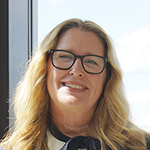
Fiona Miller |
As she leaves Border to Coast after a decade, the pool’s deputy CEO Fiona Miller reflects on flood recovery, beer-mat beginnings, and building a pool from scratch
From a factory floor in Cumbria to the top table of one of the country’s largest local government pension pools, Fiona Miller’s career is a lesson in what happens when you say yes to the muddy puddle in the forest.
The first in her family to go to university, she swapped what she refers to as a “glorified bait bag existence” in professional services for a life spent building things from scratch – finance systems, flood recovery operations, and eventually an entire pension pool built on the back of a beer mat in a York pub.
As she prepares to leave Border to Coast after nearly a decade, Fiona reflects on the accidental route that took her from Kalamazoo ledgers in a police payroll office to reshaping how billions of pounds of local government money is invested.
It’s a story about pooling, politics, and the belief that public services – done properly – can be genuinely transformative for the people who rely on them.
Fiona spent three years in Liverpool studying accountancy under the tutelage of – amongst others – Liverpool University’s head of economics and former Margaret Thatcher adviser Professor Patrick Minford, before starting off her professional career at KPMG.
It was at KPMG that her expectations of the finance world were smashed. She said: “I chose accountancy because it was what everybody did, and because of my limited understanding of the world and jobs.
“You watched telly, and lawyers and accountants had the best jobs, they wore smart suits and they had briefcases – and to me that was not a world that I’d ever seen. It was a world of financial security. I was sorely disappointed when I got there and realised the briefcase was a glorified bait bag.
“The only difference was the paper was pink and bigger, but other than that it was pretty much the same as my dad’s bait bag that he took to the factory every day.”
The other learning she took from the experience was that auditing was not for her. So, after a conversation with her soon-to-be husband who was a firearms officer in Cumbria Constabulary, she decided to move back home to Cumbria to get a job in finance at a manufacturing company.
“I realised that I needed to be in places that build things, that have things at the end of it” she added.
“And I went there to finish my exams and have a job locally. But I was lucky because at the time they were putting in new financial systems right across the company. They were taking it from six very disparate, limited companies to a structured group company, and they were floating it.
“And I managed to get involved in all of that with no experience because the group CFO thought I could do it, and I was up for it. This was my first experience of what it means to have an internal sponsor who believes in you, not because of what’s written on paper but because they see what you bring and are willing to put their reputation behind.
“He was also the one who encouraged me to move on when the time was right.”
From there, she took a role as finance and IT exec at a company building what would eventually become Centre Parcs Whinfell Forest. “When I first visited, it was a muddy puddle in a forest.
“We had 10 months to get something up and running, including through the Cumbrian winter. And that was a phenomenal experience.”
This meant coping with everything such a project could throw at you – from getting forklifts and cranes stuck, to the tills going down on New Year’s Eve, with 4,000 guests on site.
“It was a fantastic opportunity”, she explained. “But it was 80 hours a week, every week – and on call – and I decided I wanted something more on the personal side of my life.”
This led to Fiona’s first foray into the public sector taking on a role in the police – moving into their finance department, and giving her an opportunity to, once again, build something new.
She said: “They were doing their payroll on Kalamazoo ledgers – which are carbonated copies of hardback sheet ledgers, and they had to hand write everything, and every police officer and civilian member had their payroll processed through a Kalamazoo ledger book and then uplifted onto a council payroll.
“And they were doing system implementation – so they were moving their finance systems over to an Oracle system. So again, it was the opportunity to build, shape, and do something while affording me a job that was five minutes away from home.”
It was here that Fiona started to understand what local public service delivery was about – providing her with opportunities not only to work on projects local to Cumbria – such as a pathfinder PFI project to build a police station – but further afield as well.
“Public sector organisations are seen as sleepy and slow, and that is just not my experience of them”, she explained. “They have governance structures for a reason that people from outside struggle with, but it doesn’t mean they’re not innovative and progressive.
“What they’re doing and coping with on the ground, and what they’re addressing, I have always found exciting and the opportunity to move across departments and do different things, if you put yourself forward, is extensive.”
And Fiona was able to see all the incredible power of the public sector first hand with the region being hit with the first of two 1-in-100-year weather events – leading to the 2005 Cumbrian floods.
It resulted in around a third of the county being non-functioning, critical infrastructure being decimated, bridges being lost and kids being unable to make it to school.
She added: “But helping Gold Command through that period really showed what multi-agency local services could do and how they respond. And it was all about getting people safe and re-homed, and getting services back up and running.
“Mobile phones and emergency radio systems weren’t working across the county – so there were very limited communication systems. You really can’t explain what those services had to cope with.
“You’ve also got to understand that a large proportion of Cumbria works in the public sector, so the people that were turning up to work had families coping with no house or possessions and all the Christmas presents stacked outside – so it was also about understanding those dynamics at a local level.
“But that really started to differentiate for me what it means to provide local services to local people, and what it means to be part of that infrastructure that “just does”, when it needs to be done.
“It just makes stuff happen for the people on the ground.
“You’re not talking about IP, you’re not talking about profit – you’re literally saying ‘right, can you do that? We’ll do this, can you pick up that?
“Who can run the buttie van so we can feed people that are facing double shifts? Who can take clothes home, wash them and dry them so we can get officers back in dry uniforms? It was that sort of conversation that you were part of.”
From there she moved to the county council as part of an all new, all women, finance executive team.
Here, alongside having to manage – among other things – the outsourcing of the pension service (which saw them have to procure and get a pensions admin service moved in nine months), which was successfully achieved through a shared service collaboration with Lancashire CC, she learned how to manage the political intricacies of local government.
Fiona joined the council just weeks before the 2010 general election. This resulted in the coalition government’s Comprehensive Spending Review and a 28% reduction in central government funding for local authorities in England over four years.
That meant having to find cutbacks in the council’s finances. A tough task at the best of times, but Cumbria was at the time a Labour/Conservative hung council – on the face of it, a recipe for disaster. However, Fiona’s experience was rather different.
“When people think of politics, they think of the guy on the news,” she explained. “They don’t differentiate between local and national politics.
“You’ve got to remember; I’d never done a budget in a political context.
“I can remember the director of service (Diane Wood, director at Cumbria) saying to me at the time, was ‘this is how you run a budget. You will have three files. They’ll be colour coded. You’ll be going into meetings with each party. You will have all the budgets in different files. Whatever you do, you mustn’t relay one party’s thoughts to another party. It’s the only thing I’ll sack you for’.
“She was my second senior sponsor, and she was also one of the people who taught me the most about what it means to be an officer in a political environment. The true value and influence that impartial, non-political, evidence-backed advice can have.
“And literally, I was going into a meeting with the Section 151 officer, we’d come out, I’d hand my notes to somebody else, they’d go away, re-process the figures, and we’d be going into the next meeting with the next file. That’s what it’s like to turn a budget round under that pressure.
“But what we observed on the ground was, to a huge degree, that elected members put party politics away for the benefit of Cumbria, and that really started to make local politicians’ roles come to life for me.”
Another thing pushed by first the Lib Dem/Conservative coalition, and then the subsequent Conservative majority government was pooling.
Announced at a conference, the government’s plans resulted in – according to Fiona – a rather vocal response by the LGPS. She noted: “The LGPS doesn’t raise its voice, but it did at that conference.
“Then, the week after, Mark Lyon who’s now deputy CIO here [at Border to Coast], Jo Ray [now Jo Kempton, head of pensions at Lincolnshire] and myself were on a stage, and we were speaking about collaboration.
“Mark had done some great stuff helping us with some private markets, Jo and I were discussing different things we had done in administration, and we all had something to talk about regarding collaboration. And one of the elected members said ‘well, you three sound like you know what you’re doing, you should build one of these pool things’.
“So Mark and I sat in the pub after and said ‘if we built one of these things, what would we want to take? What would we want to leave? What would we want to achieve?’ And we split some beer mats and wrote some things down as to what we would build. The beer mats still form part of the induction of all colleagues at Border to Coast.
“Then I messaged him and said ‘was it such a stupid idea?’ Typical Mark, I didn’t hear anything for 48 hours and then I got this list of, ‘if we’re going to do it, we need to do boom, boom, boom, boom. You know everybody, who can we talk to?’”
It resulted in Fiona and Mark going back and forth, using their contacts, to find all the constituent parts to build the pool. They then went to speak to consultants about their plans.
She added: “We just assumed the consultants would know more than us, and they didn’t. For a start, the ACS (Authorised Contractual Scheme) was such a new structuring vehicle, and they had very fixed views on what this should be, and we just didn’t agree. We really didn’t agree with their view.
“We didn’t agree with it all going passive. We didn’t agree with four funds on a regional basis, but the consultants had made their minds up about what the LGPS should do.
“We had 10 guiding principles that we put on a sheet of paper, and I said ‘if we’re going to break this idea of regional and make it about investing and doing the right thing for the underlying funds who joins us, we really need somebody to join us that will blow a hole in that’.
“So we discussed our plans with Denise Le Gal, who was chair of the Scheme Advisory Board and Surrey Pensions Committee at the time, and she said, ‘yeah, that sounds like a good idea’.
“We then got the Section 151 officers and chairs in a room, we ran through our 10 guiding principles, a set of stats that showed why we were different, and why it was right to build something that was for all of us.
“And we expected to come away from that with a whole list of work, and they all just sat there and said, ‘yeah, that sounds great. What do you need us to do to move this forward?’.
“And I said, ‘this is a list of funds we think would be interested, could buy into this, and could help us shape it with the right culture. We can start there’.”
All told, the original three – East Riding, Cumbria and Surrey – talked to eight other funds, six of which came and asked, “can we bring a couple of friends?”
Fiona added: “Mark and I thought it was a challenge to get maybe six funds that would hit the £25 billion hurdle rate – that was our ambition. To come in with 12 and have the largest AUM was never on our radar.”
One of the primary reasons why they decided to go and build the pool themselves was because they were very much of the view that “if we don’t do what we think is the right thing to do, government will make us do something that is not in our collective benefit”.
Fiona added: “To put it into context, if I’d gone regional, I estimated Cumbria’s performance at the time to be about £50 million a year better than the average of who I would have been put with. That equates to a lot of services on the ground in Cumbria.
“That was what it was about to me. Yes, it was exciting to build something new – I’m a geeky operating model person, a technical person – but primarily it was about providing services to the local community, and I believed you could do something material with this concept.
“I wanted access to internal investment; I was never going to be able to get that [at Cumbria]. East Riding had that and when South Yorkshire came in, they strengthened this capability.
“While all bought in the concept, funds joined for different reasons. South Yorkshire had a staff resilience issue, pooling was going to be dearer for them in some areas, but it provided a long-term sustainable solution to their recruitment issues meaning they could retain access to internal management.
“When Tyne and Wear came in, they had great scale, but they knew they weren’t going to get the proportionate savings that some of the other smaller funds were going to get. But if the smaller funds came in, they got a bit more resilience and savings, and they could offer their weight to others in the fee negotiations at scale.
“And it was that sort of discussion; it was about how can we as a collective do better.”
Perhaps the best example of this collective spirit was when the pool first launched. Fiona explained: “When we launched, the first funds that had to go live were the internally managed funds because we had safeguarded the staff by adopting the Transfer of Undertakings (Protection of Employment) Regulations.
“So the externally managed funds said, ‘yeah, we get that. We’ll wait for the second phase of propositions, and let you build the internal first’. And it was conversations like that that were just accepting of what had to happen for everybody to make it work.”
Of course, the most radical change for pooling ever since it was first proposed has come as a result of Fit for the Future. In truth, it was something Border to Coast had already been thinking about.
Fiona explained: “We’d already got a roadmap on things we would be considering, and one of those was to be ready if the right opportunity for scale came. We were not going after scale; it was more about if it hit.”
Added to this, the benefit of the pool being engaged with the likes of MHCLG and LGA meant that – while it wasn’t asked explicitly – they had a rough idea of the direction of travel.
That road led to 21 funds looking for new homes – seven of which moved from ACCESS to Border to Coast.
Describing what these conversations were like, Fiona said: “It was funny because when we started talking to people who wanted to talk to us, we said ‘we’re building something new’ and the seven that came said, ‘whoa stop! We’re buying into what you’ve done’.
“‘You’ve got a proven track record, we like what you’ve done, we’re buying what we can see, so don’t change what you’ve done. We want to be part of helping you shape and build the next bit, bring the best of us, but we want immediate access to what you’ve got’.
“It was a real tipping point in the conversation and it really helped with things like the shareholder agreement, where they said ‘you looked at it 18 months ago. It stood the test of time, just leave it – we’ll take it, and when we really know what the new service looks like in a couple of years, we’ll have a look at it.
“‘It doesn’t make any sense to do it now, it’s good, leave it – focus on advisory, focus on taking these assets on, focus on building a sustainable IT platform that can operate at an enhanced scale and focus on benefit delivery’.”
As for what the new funds have done for Border to Coast, perhaps the most notable change has been how it has strengthened its officer group.
Fiona explained: “People think about pooling as something that just happens in the pooling company – and don’t get me wrong, there’s a lot happening in the pooling company – but a lot of work has landed at the officers’ doors in their governance changes, their political changes.
“This, is alongside everything else they’ve been facing, admin, valuations, changing political parties etc. Investments is not their job, running a fund is their job, investments is a small part of it and I think people forget that.”
As part of this process, the officers have held their own “cultural workshops”. “And that’s them together”, she added. “That’s them saying ‘look, we need to work as a collective. Where can we share things? We don’t all need to be on everything, let’s have working groups’.
“We’ve got something like 30 working groups to get this thing over the line, and they’ve agreed between them who’s part of which working groups.”
A key aspect of Fiona’s time at Border to Coast is ensuring they get the culture of the business right. And this starts from the recruitment process – with 50% of the focus being on the technical skills, and 50% checking if the individual is the right cultural fit for the organisation.
All this stems from Fiona’s passion for social diversity, whether that’s on boards or in organisations more broadly. She explained: “That has to start from people actually knowing what’s open to them.
“If you’d asked when I went to university, do you want to work in banking? All I would have thought about was the tiller, the person behind the counter, or the bank manager – that was what I thought banking was.
“So if people don’t know what the roles are, how are they ever going to have an aspiration to go into them?”
And the way she positions herself as a role model is not by hiding behind where she comes from. She added: “It’s a standard joke, if I say I’ll meet you for dinner, I mean dinner time, which is the middle of the day where I come from.
“I have changed, but I’ve not changed the way I speak, I’ve not changed the way I think, and I’ve not changed what I believe in.
“University opened my eyes to what was out there, and that was the start of the journey, but giving people the line of sight as to what is available is absolutely key to me, and I’m passionate about raising this awareness and, where possible, offering individuals the exec sponsorship that I have received throughout my career.
“We had a board meeting (and our board is fantastic), which shows how blinkered you can be about social diversity. Three members were talking about Oxford Cambridge Blues. And I just said, ‘do you three recognise how socially inclusive that is not?’.
“A different member of the board added, ‘well, I didn’t even go to university so I’m nowhere near this’. And it generated a healthy conversation in the board. This demonstrated to me the strength of our board and the real commitment to cultural inclusion.
“The emotional security in the room to raise the issue and openly discuss it was never something I doubted. When we say culture comes top down and bottom up in Border to Coast, we can demonstrate it in how we can raise these issues, own them, and make change.”
It’s an issue she went on to explain, that is present across the financial services – particularly underlining the rarity of those coming through non-traditional entry routes.
“There have got to be options and different ways for people to come through”, she added. “There’s got to be ways to value that diversity of thought and what it can bring, and I’m absolutely passionate about how much that can strengthen governance.
“And you don’t have to do much to open up that opportunity.”
This is why the pool pays its interns, “specifically so that we can offer it to anybody that is capable, and can bring the right attributes and skills to work to take advantage of it.”
After nearly a decade at Border to Coast and having been there since its foundation, Fiona is set to leave the organisation. But that does not mean she’s leaving the LGPS – with her continuing in her role as chair of the Lancashire Pension Board and recently taking on a non-executive role at fellow LGPS pool the Wales Pensions Partnership, as chair of the audit risk and compliance committee.
She added: “It’s brilliant to be helping them shape something that is so different to what Border to Coast built. In the interview, Rob Lamb – their CEO – spoke passionately about a proportionate efficient operating model design, with a regional focus on delivery of investment outcomes for communities across Wales. It’s just my bag, in an area I really feel I can help with the experience I have had. I am thrilled to have another opportunity to help build something innovative for the LGPS.”
Outside this, Fiona said she’s looking at independent person roles. She explained: “I think there’s a lot we can give back – and the breadth of those roles, I personally think you need to have been senior in local government.”
Explaining her thinking about the role, she added: “There’s a reason you would appoint trustees and they bring a raft of skills, but there’s so many levers that are just not available in a local government pension fund.
“You can’t change the scheme benefit structure; you effectively cannot sack the pool – and that’s not the answer to improve performance anyhow.
“It’s not a trust-based scheme, it’s elected members who are making decisions – and there are so many things you need to understand. You need to understand the long-term nature.
“It’s an open scheme, how contribution rates flow through to the tax base, how the employers’ base is made up etc.
“It’s also important to understand the nature of what that scheme provides and the importance of public pensions.
“You’ve all heard of gold-plated pensions in relation to the LGPS – it just isn’t true.
“The average is about £5,000. It’s the difference between being means-tested or not in retirement – and it’s a dignity issue.
“These people have worked all their lives, they’ve earned their pension, they’ve earned the right to just that little bit that means they can turn the heating on without thinking about it. It’s also about protecting public services, the pension is part of why people working in local government. Helping to ensure its long-term sustainability and therefore affordability is key.”
From a muddy field in Cumbria to co-founding one of the LGPS’s largest pools, Fiona’s career has been defined by a willingness to build things that didn’t exist before – whether that was a leisure resort, a modern payroll system, or an entirely new model for pooled investment.
As she moves on to a non-executive role with the Wales Pensions Partnership, her focus remains exactly where it started: making sure local government pensions work for the ordinary people who’ve earned them, and support the sustainability of the services they deliver to the local communities.
It’s a fitting next chapter for someone who has never lost sight of where she came from, nor of the dignity that a decent pension can offer in retirement.
|
|
|