
An Audience With
How Equitix uses data and AI to drive its active climate stewardship strategy
Interviewee:

|
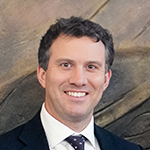
Joe Robinson |
In an interview with LAPF Investments (LAPF), Equitix’s director of investment stewardship and sustainability, Joe Robinson (JR), outlines how active engagement and technology support climate risk management while delivering sustainable infrastructure for the future
LAPF: How does Equitix define responsible investment?
JR: “At Equitix, we define responsible investment as making good investment decisions into critical infrastructure assets that deliver a variety of positive environmental and social outcomes, serving communities and delivering strong financial returns to investors.
“Throughout the investment life cycle, we think strategically about how sustainability can be embedded into our investment decision-making, ongoing asset management and provision of informative reporting to our investors. From climate risk to supply chain governance, we view sustainability as an important tool to drive good risk management and the identification of value upside opportunities that are beneficial to returns.”
LAPF: How do you ensure that climate considerations are embedded in the day-to-day decisions of your investment teams?
JR: “We look at climate considerations at a variety of stages in the investment life cycle, as it is particularly important to the physical context of operational and construction infrastructure projects.
“A changing climate can affect the operational performance of assets, and we want to ensure that our assets are resilient to those changes and continue to facilitate the essential services they are built to provide – whether it’s hospitals, schools, waste management or renewable energy generation – without a detrimental impact from climate change.
“When we’re looking at potential opportunities for our funds, we look to define and assess the key climate risks associated with a prospective investment opportunity.
“It will be dependent on the type of asset, its geographic location, and the nature of the investment that we’re making, as well as how we think about governance and active management steps to mitigate potential risks, maintain resilience and capture opportunities.
“Our due diligence exercise then informs our post-investment plan, taking key insights on the technical risks, looking at the mitigations and potential strategies to manage and build resilience into the asset.
“We also consider climate and sustainability within our contractual materials such as management services agreements and operations and maintenance contracts to ensure – once we’ve made the investment – we have the framework in place to then start embedding new practices if required.
“Our direct equity stakes in infrastructure assets give us the impactful opportunity to directly influence – through our engagement with management teams and project partners – how sustainability provisions are embedded into day-to-day operations, and how, from a shareholder perspective, we can develop good governance to oversee the implementation of action plans.”
LAPF: How would you determine which climate risks and opportunities are material enough to influence investment decisions?
JR: “We take a well-informed methodology and also leverage our experience across other assets to determine what good practice looks like and ensure we’re sharing ideas designed to maintain resilience over the long term.
“Our approach to looking at what is material and what’s relevant to an investment decision is really based on the individual context of the investment, taking account of investment objectives, examining operational impacts, assessing how our assets can mitigate and manage those, and using the wide range of data we’re building every year to inform what we think is appropriate in the context of that particular investment.”
LAPF: What prompted your decision to develop the AI-enabled climate risk technology in partnership with the UK Space Agency, and what have you learned about how climate change might affect renewable energy assets?
JR: “Our partnership and funded project with the UK Space Agency has been an exciting period where we’ve sought to improve and deepen our understanding of how changing wind speeds, affected by climate, could potentially impact the future performance of onshore and offshore wind generation.
“We’ve always wanted to ensure that frameworks such as the Task Force on Climate-related Financial Disclosures become truly relevant to the investment life cycle and decision-making process.
“A lot of that has to do with how you bring climate-related analysis into existing modelling and risk monitoring, for example in areas such as wind speed, as well as utilising relevant insights to inform engagement strategies with management and other project stakeholders.
“We wanted to explore this subject in more detail, and partnering with Sust Global, a firm that focuses on geospatial analysis using advanced AI techniques, was a really exciting prospect for us to take a specific sector, to go really deep in that sector, and unpack why climate risk is relevant within the offshore and onshore wind assets that we own.
“As a result, it gave us an opportunity to share key takeaways and learnings with our colleagues who sit on the boards of underlying assets, as well as with the wider sector by leading an industry working group to present findings and develop guidance on evolving industry practices.
“I think in today’s context, sharing case studies to promote best practices is a positive development, and it really demonstrates how approaching a topic like climate risk is not about ticking a TCFD box. Instead, it is about bringing data to life in a way that is meaningful to those who oversee the operations and performance of our assets and providing insight into how this is relevant to their day-to-day considerations.”
LAPF: Social infrastructure forms a significant part of Equitix’s portfolio, and there are a number of pressures to decarbonise. What are the unique challenges in this sector, and how can public-private partnerships support this transition?
JR: “Social infrastructure is an interesting sector. We see a lot of appetite for decarbonisation, for example in sub-sectors such as student accommodation, where universities are looking to deliver new accommodation assets that align with their long-term ambitions around decarbonisation.
“We certainly see an increased focus on designing solutions within that sector related to decarbonisation, for example meeting Passivhaus criteria and net zero standards. This is about recognising we are developing long-term assets that need to be fit for the future.
“In other sub-sectors of social infrastructure, it can be a complicated question that requires a partnership-based approach between the private and public sectors, and one where we feel that doing proactive analysis on potential options and strategies across different projects is the right approach to have informed conversations at the right time.
“As a result, we are working to support the transition to net zero through our approach to investment and asset management. That work ranges from reviewing decarbonisation during initial due diligence, embedding decarbonisation-related objectives into post-investment plans, and undertaking proactive analysis of decarbonisation options on existing operational assets.
“It really requires a holistic, bottom-up approach to ensure projects are being used in the right way, to maximise efficiency, influence behaviour, and ensure the use of a building is optimal, while also looking at what potential funding solutions are available in order to implement changes where necessary.”
LAPF: Looking ahead to 2030, what do you expect will be the most significant climate-related changes affecting your portfolio?
JR: “Looking ahead to 2030 and beyond, we will focus on ensuring climate-related engagement projects reinforce the principles behind why these considerations matter – protecting our investors’ interests and strengthening the long-term resilience of critical infrastructure for the benefit of communities served.
“We’ve spent a number of years’ building out our data sets, particularly on physical climate risk, but increasingly in areas such as transition risk and opportunity, and we’ve seen improvements in terms of data coverage around emissions, but there are more steps to be taken in some aspects of the portfolio.
“Nonetheless, data coverage shouldn’t be blocking us from making progress. We make use of what we have to drive effective engagement.
“In areas like physical risk, we’re expecting to see improvements in how management teams think in an ever more sophisticated way about the practical considerations to address areas of potential risk.
“On the transition side, we’d naturally expect to see further evolution on policy, regulation and technology across the sectors we’re invested in and will continue to assess how this impacts our assets, where the opportunities lie as well as risks we want to mitigate throughout the investment lifecycle.
“And, we’ll continue to ensure we’re having informed management conversations and effective engagement activities on this important sustainable investing focus area, amongst other themes, so that Equitix continues to be an effective responsible investor and long-term steward of critical infrastructure.”
More Related Content...



|
|
|