
An Audience With
An Audience With George Graham
Interviewee:

|
George Graham |
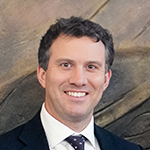
George Graham, Director of South Yorkshire Pensions Authority, is driving innovation in local government pension investments. From supporting UK economic growth through place-based impact investments to navigating the challenges of balancing fiduciary responsibility with broader societal goals, George offers a fresh perspective on the evolving role of LGPS funds. In this exclusive interview, he shares insights into South Yorkshire’s forward-thinking investment strategies, collaborations with Border to Coast Pensions Partnership, and the importance of aligning with local and national priorities. Reflecting on his career, George discusses the lessons learned in unlocking untapped opportunities and how these experiences shape his approach to the future of pension fund management.
How do you see the role of the South Yorkshire Pension Fund, and LGPS funds in general, in contributing to domestic economic growth and capital market development?
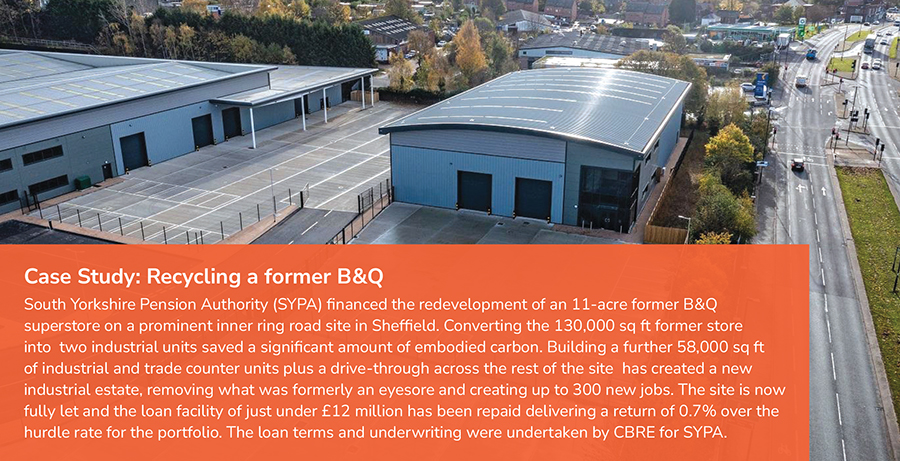
The key is in the name – we are the “Local Government Pension Scheme”. LGPS funds have the connections in place to ferret out the opportunities that fund managers and others might not be able to see. We have certainly seen that in South Yorkshire with some of the projects which we have looked at like the opportunity to “recycle” a redundant B&Q site. But the word “pension” is also important. Our job is to pay pensions, not solve all the problems of the UK economy, that’s for others to do. Where it is in the interests of our scheme members we can and should contribute; where it isn’t we should steer clear.
The Pensions Investment Review highlights the government’s ambition to unlock the UK pensions market for growth. What are your thoughts on the potential impact of this initiative for LGPS funds?
I’m not sure that LGPS funds need to be unlocked. Most funds I know would be more than happy to invest in opportunities which support UK growth and deliver appropriate returns for our scheme members. The issue is that those opportunities are too often frustrated by an inconsistent policy environment such as the never-ending saga over whether the UK will support on-shore wind. If a consistent stream of projects with the right return characteristics and risk profile comes forward, we will invest in them. In fairness, the indications are that the government realise this and have taken some initial steps to provide some greater clarity in the policy environment. In the longer term this could, if the government’s aims are achieved, result in some reconfiguration of private market allocations, with for example less focus on global buy-out funds and more on earlier stage businesses. It also seems likely that we would see more collaboration between the LGPS and other institutions such as the National Wealth Fund and the British Business Bank.
How do you think LGPS funds can align with the government’s goals while maintaining their fiduciary responsibilities to members?
I do think we tend to get hung up on this and it becomes an obstacle to place-based impact investing which is what I think the government is looking for us to do. We have a simple test: each asset class has a target return or hurdle rate, which forms part of both the investment and funding strategies, and a place-based impact investment has to meet the same hurdle as any other investment in the same asset class. It’s that simple: if an investment doesn’t meet the hurdle rate then we won’t do it.
In your view, which sectors or areas of the UK economy present the most compelling opportunities for LGPS investment?
The new government’s industrial strategy pretty much defines the obvious growth sectors in areas like life sciences, green tech, advanced manufacturing and defence, while, given that we need so many new homes, housing and construction are other obvious areas. Some of these will be more attractive than others depending on the potential structure of investments and the risk level. Somehow as a country we need to connect more of the underlying opportunities to more fund managers more quickly to exploit these opportunities. Perhaps some of the work that the government wants LGPS to do with elected mayors (and their equivalents) might help with this.
How can LGPS funds contribute to addressing critical challenges, such as infrastructure, housing, or the energy transition, while achieving strong financial returns?
There’s nothing new here. People across the LGPS are doing it already – investing either directly or through fund managers in renewable energy and housing projects and making money. The thing is that as a country we need more of this investment which is deployed more quickly, which isn’t an issue that LGPS can solve.
How do you approach the balance between supporting UK growth and maintaining global diversification within the South Yorkshire Pension Fund’s portfolio?
The fund has over £11 billion in assets. Currently we have £105 million actually in the ground in South Yorkshire although with significantly more committed and the intention to grow this to around £500 million over the next few years. While this is significant locally it is not sufficient to impact the overall diversification across the fund and never will be. And to a degree that’s the point, we don’t have to invest a disproportionate share of the fund in our place to achieve an outsize impact on the ground as well as the returns we need. We are overweight to the UK as a whole, like the rest of LGPS, but there are good reasons (such as lack of exchange rate risk and the matching properties of index-linked Gilts) why this is the case. The stream of new UK opportunities would need to grow massively in both number and financial attractiveness versus the rest of the world for the current level of geographic diversification to fundamentally change, and that would be a big strategic call which doesn’t particularly fit with the moderate risk approach which we take to managing the fund.
Can you share an example of an investment that supports both local economic growth and ESG objectives?
We provided a £10 million loan facility to a developer to “recycle” a redundant B&Q site in Sheffield into a new industrial estate. This saved the embodied carbon that would have been released through demolition, maintained the site in employment use (generating 300 jobs) and removes an eyesore on what is a prominent site on the ring road. This is not a massive development, but it has a significant impact not just in terms of the jobs created but also in helping build confidence in Sheffield and South Yorkshire as a place to invest, and also through the improvement to the local environment.
How does South Yorkshire Pension Fund collaborate with other LGPS funds or with Border to Coast Pensions Partnership to support UK-focused investments?
We have committed about 20% of the funds being invested in Border to Coast’s UK Opportunities product which we see as a useful means of reducing concentration within the overall place-based impact allocation and, as with all Border to Coast products, we and the other partner funds have contributed to its design. We are always happy to share experiences with other LGPS funds in this area and the pool has provided a vehicle to do this, and if this turned into some form of co-investment then that would be an added benefit.
What do you see as the biggest barriers to increasing LGPS investment in UK growth, and how do you think they could be addressed? Are there specific regulatory or structural changes that could make it easier for LGPS funds to invest domestically?
Certainly, freeing up elements of the planning system and achieving speed and consistency of decision and delivery around infrastructure projects would help create greater confidence. I am sure there are also some technical changes to tax rules that might help, for example the different reliefs available for property taxes in different parts of the UK make doing some things more difficult than they need to be. What we need is a steady flow of appropriately scaled, well developed and credible projects, and any changes that achieve that should be welcomed. Personally I am less attracted by mega-projects than by something more mid-scale that delivers a real benefit as well as a real return in a reasonable timescale, so if changes achieve a good flow of them I’ll be happy.
Looking ahead, what is your vision for the role of LGPS funds in driving UK economic growth over the next 5-10 years?
It isn’t our job to drive economic growth. Our job is to pay pensions and we need to keep that at the forefront of our thinking. However, where we do invest in the UK, certainly in private markets and real estate, it can have a positive impact on growth. If funds make that type of investment as part of a strategy which targets investment at priorities agreed with key local stakeholders such as elected mayors then it might be possible to achieve a double whammy in terms of benefit to the fund and wider impacts. This does depend on us adopting a slightly different mindset and looking at things with a policy mindset as well as a purely return mindset which will be an interesting change to observe.
What inspired you to take on the role of Director at South Yorkshire Pension Fund, and how has your experience shaped your views on the role of LGPS funds in supporting both local and national priorities?
I’m not sure inspiration is the right word. I wanted to get back to running a fund and there isn’t, in my view, a better opportunity in the LGPS given South Yorkshire’s unique position as a single purpose local authority. In terms of how my experience has shaped my views on LGPS investing locally when I worked at Lancashire, I was involved in a number of major economic development projects including the Preston City Deal where it became clear that public sector investment in infrastructure such as roads was creating significant opportunity for institutional investment. At Lancashire we also developed a local real estate portfolio for the pension fund, and I will never forget the fund manager coming back from a tour of the county and saying that he had never realised the scale of the opportunity because he hadn’t looked before. So, I suppose in this area I am looking for returns where we haven’t looked before because it is getting harder to make money where we usually look.
More Related Content...



|
|
|