
An Audience With
An Audience With Emmanuel Bocquet
Interviewee:

|
Emmanuel Bocquet |
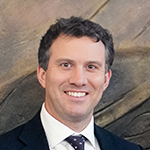
Emmanuel Bocquet joined Lothian Pension Fund in November 2023 to lead its c.£10 billion investment portfolio and in-house asset management team. He speaks to LAPF Investments about the pension scheme’s approach to private markets, responsible investment and collaboration with other local authority funds.
Lothian Pension Fund has developed a strong presence in private markets. What factors have driven your decision to allocate here, and how do you assess the balance between risk and return?
I can’t claim any credit – I’ve only been here a year and we’ve been investing in private markets for a very long time. We’ve been making infrastructure investments for over 20 years. There is a strategic allocation to what we call real assets, including property and infrastructure mostly, but also things like timber.
The focus has been on infrastructure in recent years as it’s an attractive proposition: the financial returns, the contribution to climate solutions, but also the way we access it. Having an in-house team of experts who have been around for a long time means we can access opportunities in a different way. Rather than committing to primary funds, which is the way most people do this, we tend to access the secondary market or make co-investments. And because we’re such an established presence in the sector, we’re recognised as a key counterparty.
We also run our UK property portfolio in-house, which is a significant and unusual setup for a pension fund. The ability to have an in-house team looking after UK commercial property means we can do things that are different from a big asset manager.
How does the in-house team give you an edge, and what challenges does it present?
The “edge” is just having the option. It doesn’t mean you have to have 100% in-house, it means you’ve got the choice. There is a balance with private markets. Clearly, we’re not big enough to actually buy the assets ourselves, so we’re still relying on external managers, but it’s the way we access those, through the secondary market and co-investments, that is the key differentiator. We get better deals because of who we are and the experience that we have.
We have a long-established in-house team. We want to make sure we keep them motivated and incentivised. The people we have also appreciate that we are a long-term investor – we’re not subject to the whims of quarterly performance. Some staff have come from external managers, so they can tell we have a different attitude to investment.
How has Lothian diversified its portfolio within private markets? What role do these investments play in your long-term strategy?
With private assets there is an illiquidity premium, but there are also many other benefits that come from having infrastructure, property and timber. You get inflation protection, access to climate solutions, and potentially more exposure locally than you’re able to get in a global equity market. There are more assets there, too. There are no Scottish listed equities, and even UK listed equity is different, but there is a lot going on in private markets. Why do we have such a large allocation to infrastructure? Because that’s where we see attractive risk-adjusted returns.
Lothian Pension Fund has been recognised as a leader in responsible investment. Can you walk us through the process of embedding ESG criteria into your investment decisions?
We’re guided by the UN Principles for Responsible Investment, which is the global standard, but we go further in terms of our approach to embedding responsible investment considerations in decision-making. Obviously, we need to have a statement of investment principles as a pension fund, but we also have a statement of responsible investment principles.
Another benefit of having an in-house team is that we have two dedicated people for responsible investment, who sit on every investment group. We use various data providers, never relying solely on one factor. Deciding on an investment is based on multiple analyses, so responsible investment is another angle that we consider.
For every property purchase, infrastructure deal, or listed equity allocation, we will include these considerations. Practice, practice, practice, is the way to embed responsible investment considerations. We also do not believe in divestment or excluding full sectors – we think this just shifts the problem to someone else. Decarbonising the portfolio does not decarbonise the planet.
How do you ensure that your portfolio is aligned with the UK’s net zero goals? What impact does this have on your investment approach?
We haven’t made a net zero commitment as a fund. This is unusual, I think, because it’s almost expected now. The problem with that is, what’s the value if you can’t get there? Saying we will make a net zero commitment by 2050 without saying how we’re going to do it is almost an empty gesture. We much prefer to show the steps we’re taking – whether it’s voting and engagement, policy, allocation to climate solutions. We could reach net zero today by making changes to the portfolio, but this would make no change to the world.
Recently, we’ve invested in a Scotland-based “run-of-the-river” hydropower asset. We’ve been able to access this because we’re present in the secondary market, so we’re acquiring this from another investor. It means we get exposure to climate solutions, we get exposure to Scotland, and we get exposure to infrastructure with an illiquidity premium at an attractive return.
Responsible investing often involves striking a balance between financial returns and a positive social or environmental impact. How does Lothian manage this balance?
We will always get requests, nudges or encouragement from various stakeholders to direct resources to some areas. Clearly, we must be very careful because we serve the members and the employers. We do not serve any other masters. Our goal is to pay the pensions. That’s it.
If we find an investment opportunity like that hydropower asset that meets our requirements, we look at the expected risk and return of the asset over our time horizon. How does it compare to other assets we already have? If it ticks all the boxes, and it happens to be in Scotland, and it happens to help with climate solutions, then it’s easy to do. We would never prioritise something that involves accepting a less favourable risk-return trade off because that that would not meet our duty to the pension fund.
Looking ahead, what do you see as the next big opportunities in private markets and alternative investments for pension funds like Lothian, and how are you positioning the fund to take advantage of these trends?
This is always a difficult question, because I don’t see any particular opportunities at this stage, apart from the ones that continue. UK property, I think, is turning around – but you can’t just say this like it is an index. It’s almost stock by stock, which goes back to the point of having an in-house team that can go through various deals. But UK property is unloved at the moment. Rising interest rates, Brexit, and Covid-19 have all contributed to limiting the appeal in general, so I think that that could be an opportunity for us.
Since the 2022 Gilts crisis and the rise in yields, most defined benefit corporate schemes are happy to offload private assets, so that gives an additional area for us to look at in terms of the secondary market. That’s been most apparent in infrastructure. Pension schemes are now much better funded and some are looking to go to a buyout with an insurer, meaning they have to get rid of less liquid assets on the secondary market. Because we have been investing in this asset class for a long time, we’re well known in the market and that helps us.
Given the ongoing economic uncertainty and market volatility, how are you adjusting Lothian’s private markets strategy to ensure resilience while still delivering strong long-term returns?
We concluded the 2023 actuarial valuation in March. We reduced our strategic exposure to listed equity slightly to 55%, and we allocated to index-linked Gilts to help protect the funding position. I think equity markets are very richly valued, but they’ve been like that for a long time, so it was also helpful to reduce our exposure to equities in general. We did not change our target to real assets. We’re slightly over our 20% strategic target at present but we’re very happy with this. The infrastructure assets are very resilient in terms of the cash flows they provide and inflation linkage, so there hasn’t been a need to do any tweaking.
While Scottish funds do not structurally pool assets as in England and Wales, how do you view and nurture your relationship with the other Scottish funds?
We manage fixed income and equities portfolios for the Falkirk and Fife Pension Funds, which means they mirror the strategies we run at Lothian on a cost-sharing basis. With infrastructure, we share details of deals with Falkirk, Fife, Scottish Borders Council Pension Fund, and the Northern Ireland Local Government Officers Superannuation Committee. Basically, we have a collaboration agreement in place where they can come in if they want. They still retain their own strategy and there’s no compulsion for them to do anything. It’s a win-win, because it gives them another source of investment ideas. We’re not trying to manage any extra assets.
The 11 funds in Scotland are very close. We get together on a quarterly basis to share views on various things, whether it’s governance, administration, investment. I think that’s very healthy, because we’re not in competition and we can share different things. If pooling stops at Hadrian’s Wall, that’s fine – we’ll carry on doing what we do. If there’s some kind of mandation, we’re happy to help.
What’s the best piece of career advice you’ve ever received, and how has it shaped the way you approach managing a pension fund?
Always be honest. I started my career in the 1990s on the sell side, and one of the first things I experienced was Nick Leeson [the rogue trader who brought down Barings Bank]. I wasn’t exposed to it personally, but I was trading in the same securities and saw it unfolding. It was all driven by secrecy and hiding things. Someone told me at the time to always put your hand up if something goes wrong, or if you have a question. Do not delay, do not try and fudge it, just put your hand up.
More generally, it means be open. Do what you say; never try to hide anything. The lesson applies as well in terms of being transparent with all your stakeholders. Not just when things go wrong, but also when you want to do something – always be honest with the team. It sounds obvious, but I think a lot of people don’t follow that.
More Related Content...



|
|
|